
Boundary County’s Wanted List
The Boundary County Sheriff's Office posts no most-wanted page. Its official website carries news, alerts, forms, and contact details. A warrant roster? Not there. No wanted-photo list appears anywhere on it. The Civil Division section comes closest, yet it only describes serving court papers. Those duties cover civil documents, criminal subpoenas, warrants of attachment, and warrants of distraint. That is clerical work. It is not a criminal-warrant database.
Nothing published also means nothing known. The size of a list, its update pace, whether photos appear, what fields it shows, and whether rewards or a tip line exists all stay open questions. Do not read the silence as proof that no warrants are active. Police agencies keep records on internal systems the public never sees. The same caution applies to photos. A wanted notice is an agency asking for help. An old booking photograph proves neither that a person is currently wanted nor that they sit in jail today. Keep the agency name, date, warrant language, and safety instructions attached to any notice you rely on.
Do not approach anyone. If someone seems dangerous or may be wanted, call 911 right away. Non-emergency records questions belong with the sheriff's main phone line or the court clerk. Never follow, confront, threaten, or try to detain a person yourself. Let trained officers handle it.
What a Wanted Notice Shows
No current Boundary County notice was available to inspect, so the fields below are a reading checklist, not a claim about a local template. If a public notice appears, preserve the source date and the exact agency wording. The detail that matters most is the difference between an allegation, a court warrant, and a current custody result.
| Possible field | How to read it |
|---|---|
| Issuing agency and date | Identifies who published the request and when it was checked. A repost may be older than the source page. |
| Name and identifying details | Helps reduce a mistaken match. A name alone is not enough, especially with common names. |
| Warrant or case reference | Connects the notice to a court or agency record. It is not a conviction. |
| Alleged offense or process | Reports the source’s language. Do not upgrade an charge into a finding. |
| Photo or description | May help law enforcement identify someone but does not prove current location or guilt. |
| Tip route and safety note | Shows where information should go. Use the official route and do not make private contact. |
The sheriff's site steers visitors toward public information, tips, and alerts instead. MySheriff is billed as a communication tool with anonymous tips. It is not a wanted-photo archive. When a social media post contradicts an official source, treat the post as unverified.
How to Read Boundary County Wanted Information
Check the source first. That habit keeps a wanted claim from turning into rumor, and it keeps a warrant separate from a booking or court result.
- Open the official sheriff website and look for a current notice, alert, or agency contact route. Record the date checked.
- Read the notice as written. Note the issuing agency, case or warrant reference, alleged offense, and the exact tip instruction.
- If someone may be in immediate danger, call 911. Otherwise send information through the official sheriff route or the feature named in the notice.
- Do not approach, follow, question, or attempt to capture the person. Do not publish a private charge or a copied face image.
- For the underlying arrest or booking event, use the county’s official records path described on the Boundary County mugshot and booking page.
Wanted notices change. They can be withdrawn, updated, or replaced without warning. A warrant, too, may sit unserved, get recalled, be quashed, or end in court. A notice still visible online says nothing about a jail stay happening now.
Boundary County Tips and Alerts
Boundary County has no verified Crime Stoppers chapter. There is no reward program or dedicated wanted tip line either. The supported route runs through the Boundary County Sheriff's Office main contact. MySheriff handles anonymous tips and local alerts per its own service description. Match the tip method to whatever the notice itself specifies.
Boundary County Sheriff’s Office
6438 Kootenai Street
Bonners Ferry, Idaho 83805
Mail: P.O. Box 127
Bonners Ferry, Idaho 83805
208-267-3151
Emergencies go to 911. Everything else, from records requests to general tips, goes through the official office route.
MySheriff promotes free local alerts, resources, and anonymous crime tips. Its Google Play listing repeats those same functions. No wanted list, name search, booking search, or mugshot feature is confirmed for Boundary County. Remember that a tip service is not a warrant search. Share only what the official instructions ask for.
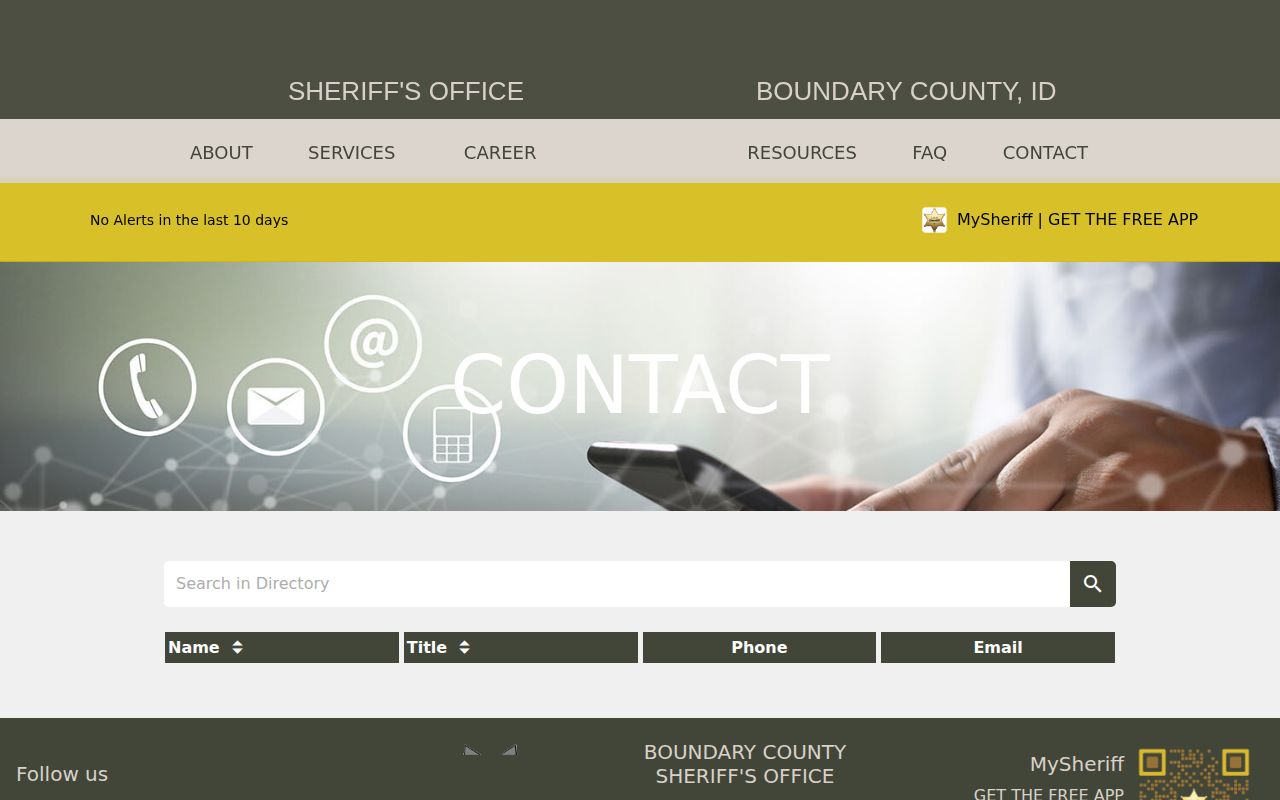
The sheriff's contact page documents the official verification route and nothing more. No wanted list appears there, and no booking photos are rehosted anywhere on it.
Wanted List Versus Warrant Check
A wanted list and a warrant check are different things. The first is an agency's own publication. The second is a search for a specific court or law-enforcement record. Plenty of active warrants never reach a public list, and a name on a list may belong to a warrant already resolved. Run both checks separately.
| Question | Best route | Limit |
|---|---|---|
| Has the sheriff published a wanted notice? | BCSO’s current website, news, alerts, and official contact | No public Boundary list was located during the research review. |
| May a court warrant or no-contact order be in a public case? | Idaho iCourt and its public-search instructions | Sealed, restricted, protected, or not-yet-indexed matters may not appear. |
| Does the sheriff have law-enforcement information? | BCSO main phone or Civil Division records route | Staff cannot disclose protected information or give legal advice. |
| Is the person currently held? | BCSO or an official custody-notification service | A warrant or court case is not a current custody result. |
The iCourt public-search tutorial walks through searching by party name and record number, and it notes that unsealed warrants and no-contact orders can sometimes be found by record number. Match the person carefully. Finding a name is never permission to confront anyone.
How to Check a Boundary County Warrant
Work through the court and sheriff routes in order for a specific name. The goal is to verify a record and pick a lawful next step, not to dodge law enforcement.
- Search iCourt by the correct party-name format or record number. Review the county, case type, dates, and any available warrant language.
- If the record is unclear, contact the Boundary County District Court clerk. The courthouse is at 6452 Kootenai Street, P.O. Box 419, Bonners Ferry, Idaho 83805, and the court contact number listed in research is 208-267-5504.
- Contact BCSO at 208-267-3151 for a law-enforcement verification question. Ask only for information the office may lawfully disclose.
- If the person believes a warrant exists, that person should contact an attorney or the court to discuss resolution. Do not rely on a private web result as legal advice.
- Keep the court status, local custody status, and later disposition as separate notes with the date checked.
VINE is not a warrant search. A missing name there clears nothing. Cases exist while people are released, transferred, or held elsewhere, and warrants get recalled or resolved long before old pages catch up.
Boundary County Warrant Types
Warrant terms tangle easily with everyday arrest language. The exact record and its court context control. Plain definitions follow. No type is assigned to any person here.
| Term | Plain meaning |
|---|---|
| Arrest warrant | A court-authorized request to take a person into custody based on the stated legal basis. It is not a conviction. |
| Bench warrant | A court process that may issue after a required appearance or court condition is not met. The docket and court clerk control the details. |
| No-contact order | A court restriction on contact. A searchable court record may have limits and should be read in full. |
| Civil process or attachment | A civil or property-related process. The BCSO Civil Division’s service functions do not create a public criminal-wanted list. |
| Detainer | A request by another agency to notify or hold a person for a limited period beyond an otherwise lawful release. It is not a warrant or conviction. |
Lean on the record number, court, and date whenever available. A private site slapping a broad label like "wanted" on someone deserves skepticism until the underlying court or agency record backs it up.
What the Civil Division Confirms
Need paperwork handled the right way? The BCSO Civil Division covers that side of the house. Its duties include records requests, service of process, and criminal subpoenas. It also handles two kinds of warrants. Those are attachment and distraint. What it does not offer is a public list of criminal warrants, wanted photos, or current jail entries. Still, for a specific process question, it is a practical starting point.
Put your request in writing. Be precise about it. Name the record, the person, the date, and the location. Idaho's public-records law allows law-enforcement exemptions, so an active investigative file or protected personal details may stay sealed. You can ask for any portion the agency can release separately. You may also request the legal reason for anything withheld. One more tip: skip the broad request for a whole private history when a single event is what you actually need.
The Civil Division also states plainly that it gives no legal advice. A person working through a warrant problem should turn to an attorney or the court. A tipster should go straight to law enforcement. Each route keeps things clean for everyone involved.
The Civil Division capture shows an official process and records route, not a public wanted roster. It should not be used as evidence that a particular person has a warrant.
MySheriff Is Not a Wanted Roster
MySheriff is run by the Boundary Sheriff. It works as a messaging tool for the community. The service pushes out local news, safety alerts, and resource updates. It also accepts anonymous tips. Nothing about it points to a public name search, a wanted-photo list, a live booking feed, or a mugshot archive tied to Boundary County. If the app ever adds such a feature, confirm it on the agency's own page first. Treat each alert as a dated message. Alerts get pulled down, revised, delayed, or copied by third parties all the time. An alert that names an arrest is only a starting point. Find the arresting agency next. Then chase the court record or a formal records response. A notice still sitting online tells you nothing about who is in custody now. One that vanishes tells you nothing about how the case ended.
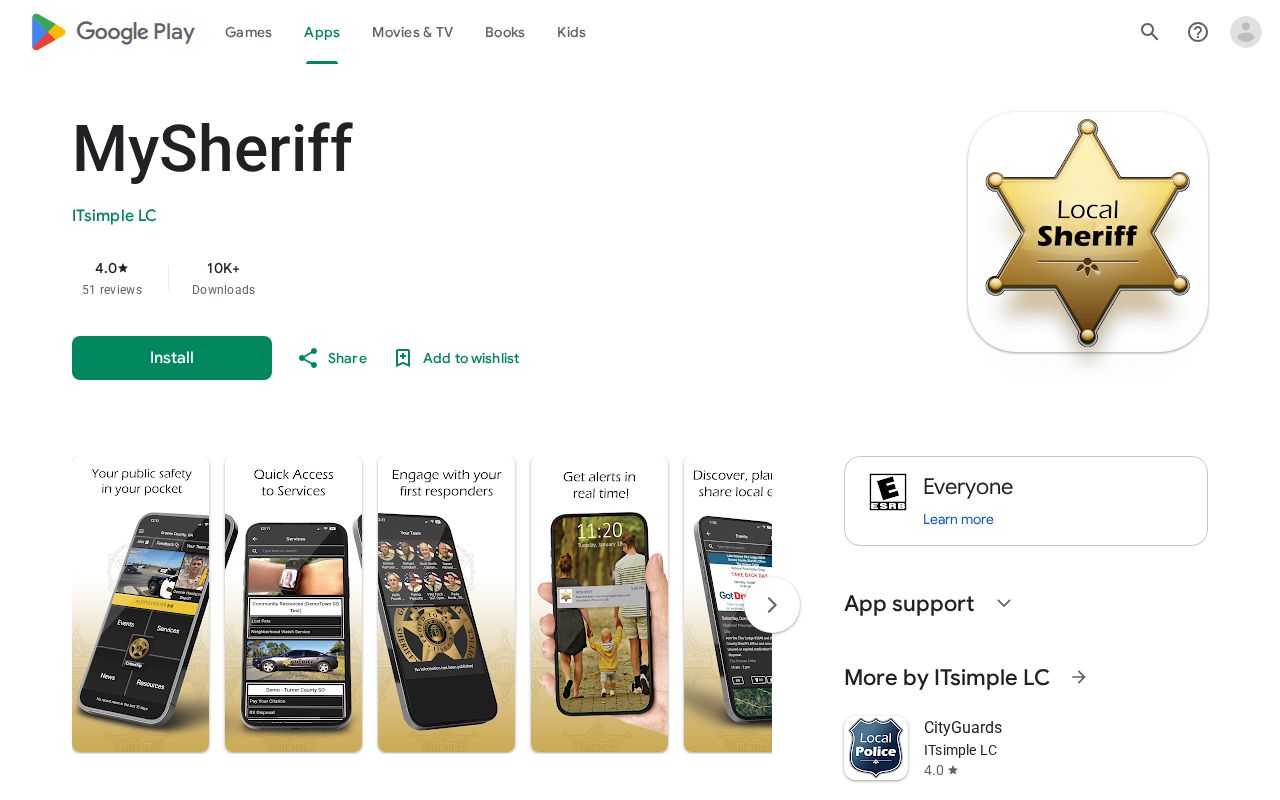
Based on its own app description, MySheriff handles alerts and tips and not much else. Calling it a mugshot service misreads what it actually does.
Wanted Does Not Mean Guilty
Need a current answer about someone's status? Look at how the source labels itself. A public court record, a law-enforcement request, a dated arrest event, a custody notification, and a historical archive page each carry different weight. That label matters far more than a loud headline or an old face image. Cases also shift over time. Dismissals, pleas, or reduced charges can change what a file ultimately says.